STLport (Luanti STL Exporter)
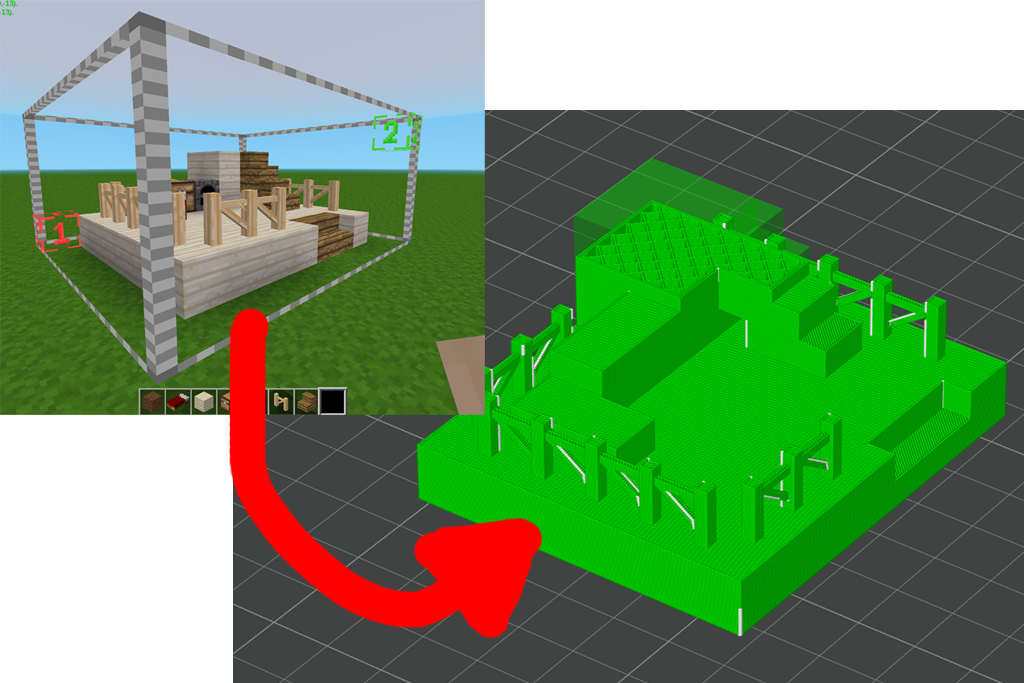
Export map areas as STL files, for 3D printing and other uses.
STLport (Luanti STL Exporter)
STLport is a mod which allows easy exporting of scenes from Luanti (Minetest)
to .stl files. These models can be imported directly into Blender, a
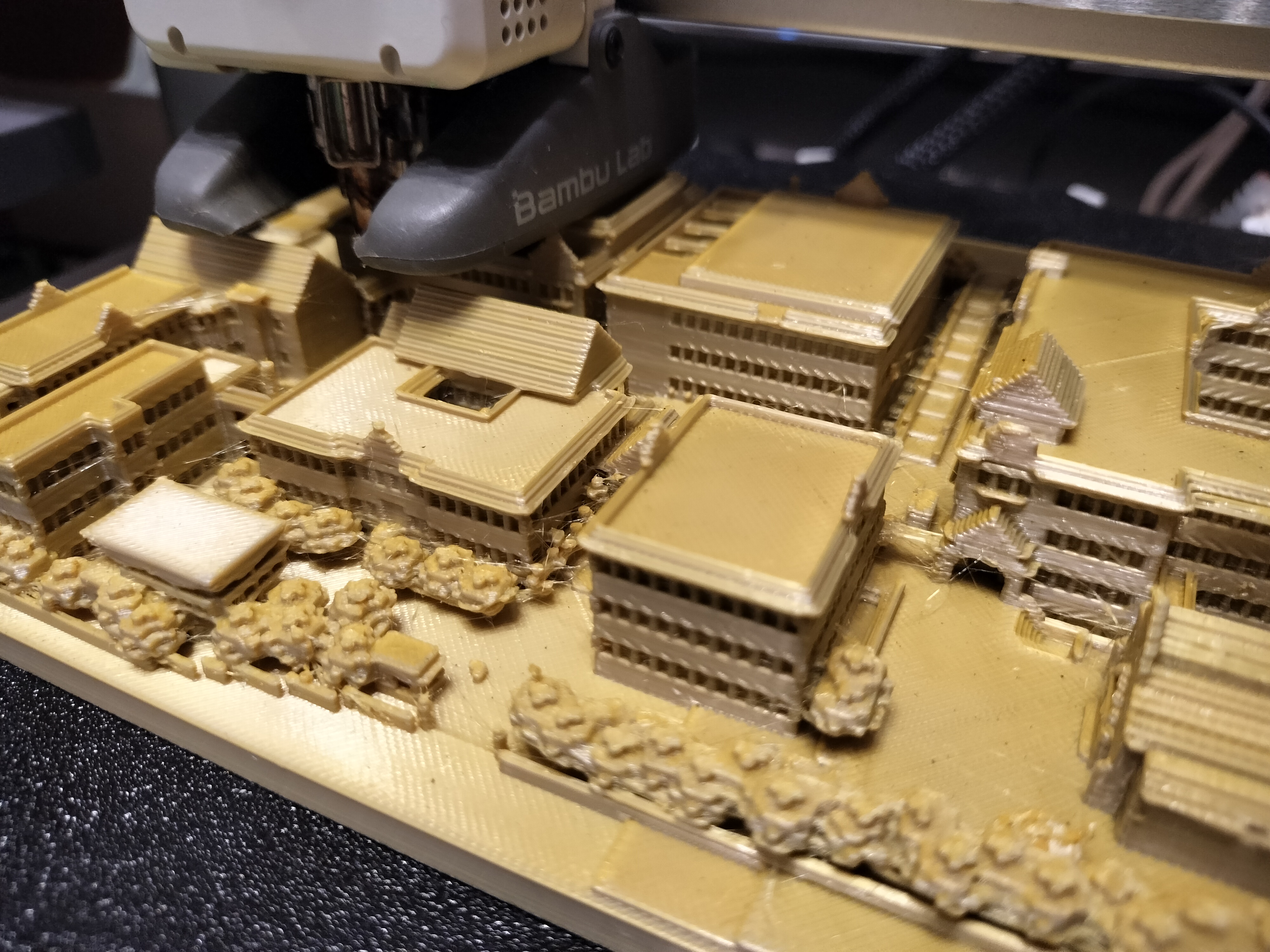
slicer, or another 3D program for rendering, animation, or 3D printing.
This mod is still in the beta phase; certain texturing features and node drawtypes are not yet supported.
STLport is developed by OFG. It is a fork of Meshport by random-geek, adapted to export STL instead of OBJ, produce watertight (closed) meshes suitable for 3D printing, and orient models to the Z-up convention used by most 3D-printing and CAD tools. Many thanks to random-geek for the original Meshport mod, whose mesh-generation code STLport is built upon — see Credits below.
Usage
Only players with the stlport privilege are allowed to select areas and
export meshes. This privilege is granted to singleplayer/admin players by
default.
To export a mesh, first select the area you want to export. There are two ways to do this:
- Use the STLport Area Selector tool. Left- or right-click on a node or object to select either corner of the area. Hold sneak while clicking a node to select the node in front of the face you clicked on.
- Or, use the
/stl1and/stl2commands to set either corner. You can specify a position (e.g./stl1 -24 0 24) or leave the argument blank to use your current position (e.g./stl1).
After selecting an area, use /stlport [filename] to export the mesh
(filename is optional).
The /meshrst command can be used to clear the current
selection.
Each export is saved directly as a single .stl file (named
<player>_<filename>.stl) in the stlport folder of the world directory. If
a file with that name already exists, (2), (3), etc. is appended to the
name.
Importing into Blender
Once the model is exported, you can import the .stl file into Blender with
default settings. Note that STL files do not contain material or texture
information, so the imported model will be untextured.
Because most 3D-printing and CAD tools use a Z-up coordinate system while Luanti is Y-up, the exported STL swaps the Y and Z axes relative to the raw in-game coordinates.
To make the exported model watertight (suitable for 3D printing), any face on
the outer boundary of the selected area is always closed off, even if it
borders solid terrain just outside the selection (e.g. the ground under a
house). This only applies to cubic-style nodes (normal, liquid,
allfaces, glasslike, and the base of plantlike_rooted); node shapes
(nodebox) are already closed on their own.
Other fixes
Some mesh nodes may not have any vertex normals, which can lead to lighting problems in Blender. This can usually be fixed by selecting the problematic nodes (either manually or by selecting by material in edit mode), marking the selected edges as sharp, and averaging the normals by face area. (Note that STL files do not store normals from the source mesh — Blender, slicers, and most other tools recompute them from the closed geometry on import.)
Some animated textures may also appear incorrect in Blender if you re-export with materials. STLport tries to scale texture coordinates of animated textures to fit within one frame, but some nodes (especially flowing liquids) can exceed this boundary. If this is an issue, switch to a non-animated texture and scale up the affected UV maps to match the new texture.
Supported features
The following node drawtypes are currently supported:
- Cubic drawtypes, including
normal,allfaces,glasslike, and their variants (see below) glasslike_framedliquidandflowingliquidnodeboxmesh(only.objmeshes are read as input)plantlikeandplantlike_rooted
STLport also supports many of Luanti's relevant features, including:
- Most
paramtype2s (note that color is ignored for colored types) visual_scale- World-aligned textures
- Animated textures (only one frame is used)
Some special rendering features are unsupported, including texture modifiers, overlay textures, and node coloring. STL itself does not carry texture, material, or color information at all, so all of the above will only be visible if you re-export the underlying mesh data (e.g. via Blender) in a format that supports it.
Notes on cubic nodes
Drawtypes allfaces_optional and glasslike_framed_optional are output the
same as allfaces and glasslike, respectively.
Due to the differences between Luanti's rendering engine and 3D programs such as Blender, it is impossible to exactly replicate how certain cubic nodes are rendered in Luanti. Instead, STLport aims for a compromise between accuracy and simplicity of geometry. In certain cases where two cubic nodes are touching, one face may be offset slightly to avoid duplicate faces while still allowing both faces to be visible.
Credits
- OFG — STLport (STL export, closed/watertight meshes, axis conversion)
- random-geek — original author of Meshport, the OBJ exporter that STLport is forked from and whose mesh-generation code this mod continues to rely on. Sincere thanks for the excellent original work.
License
Textures are licensed under CC BY 4.0. Everything else (including source code) is licensed under the GNU LGPL v3.0.
Links
- Source: https://github.com/OFG-yso/stlport
- Original ContentDB page: content.luanti.org/packages/ofg/stlport/
License
LGPL-3.0-or-later
Media license: CC-BY-4.0
Development state
WIP
| Version | Date | Min engine | Size | Download |
|---|---|---|---|---|
| 2026-08-11 | 2026-08-11 02:14:20 | 592.6 KB | Download |